Trailer Repair & Fabrication
Trailers do not fail all over. They fail in the same five places, and the tongue gusset is almost always first. We fix the cause, not just the crack.
Trailer Repair & Fabrication
A trailer frame is a fatigue machine. Every expansion joint on I-4 and every pothole on a grove road puts another load cycle into the same handful of welds, and steel does not care how strong it is if you cycle it long enough. That is why cracks show up where they do, and why we look at the whole frame before quoting the piece you noticed.
The tongue gusset is the classic. The A-frame concentrates every bit of tow load into the joint where the tongue meets the frame rail, and once a hairline opens at the toe of that weld it will run through the plate over a few thousand miles. Welding the crack shut without adding material simply resets the clock. We gouge the crack out, drill-stop the ends where the geometry calls for it, and rebuild with a properly sized gusset that spreads the load into the rail instead of concentrating it at one toe.
The other four usual suspects: coupler wear that shows up as a loose hitch and slack you can feel in the mirror; crossmembers rusted from the inside out where wooden deck boards trap water against the steel; spring hangers and equalizer brackets that crack at the tack welds after years of pothole loading; and safety chain loops, D-rings and stake pockets that were undersized on the day the trailer was built. We repair all of them, and we will point out the ones you have not noticed yet.
Fabrication work runs the other direction: dovetails and beavertails, ramp gates and slide-out ramps, headache racks, toolbox mounts, side rails, gooseneck conversions and full re-decking in treated pine, oak or steel tread plate. One rule we do not bend — we will not up-rate a trailer’s carrying capacity by welding heavier steel into the frame. Capacity is set by the axles, springs, tires and coupler as a system, and a stronger frame under undersized axles just moves the failure somewhere more dangerous.
Every repair on galvanized steel gets finished properly. Welding burns the zinc off well past the weld itself, so we clean the area, weld it, and re-coat with cold galvanizing compound. Skip that step in Florida humidity and the repair will be rusting before the next season.
| Trailer types | Utility, equipment, dump, car hauler, boat, enclosed, gooseneck |
|---|---|
| Typical turnaround | Same-week for crack and coupler repair; 1–3 weeks for re-decks and builds |
| Processes | MIG (GMAW), flux-core, stick; TIG on aluminum trailers |
| Materials | A36 plate and bar, A500 structural tube, channel, treated lumber |
| Finishing | Cold galvanizing compound, primer, enamel topcoat |
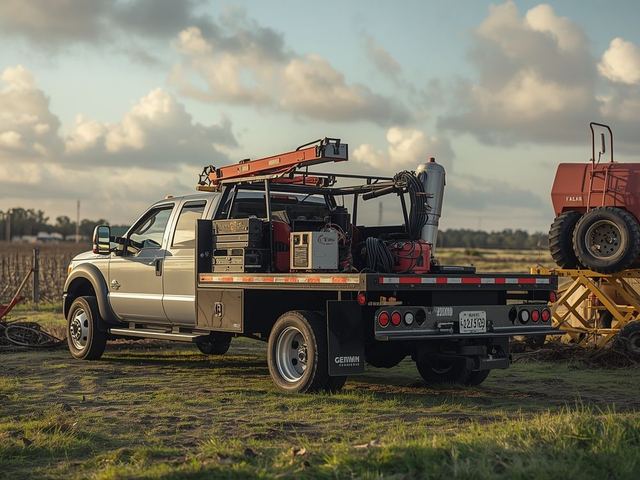
| On-site option | Mobile rig can handle field repairs on loaded or immobile trailers |
Everything this covers
No line item on this list is an upsell in disguise. If your job needs it, it is part of the work.
- Tongue and A-frame crack repair with correctly sized gussets
- Coupler, ball mount, pintle and safety-chain loop replacement
- Frame rail and crossmember replacement — including rusted-from-inside sections
- Spring hanger, equalizer and axle bracket repair or relocation
- Axle replacement, alignment checks and brake flange work
- Re-decking in treated pine, oak or steel tread plate
- Ramp gates, dovetails, slide-out ramps and beavertails
- Fenders, stake pockets, D-rings, tie-down chains and headache racks
- Gooseneck and bumper-pull conversions
- Cold-galvanizing and primer on every repair to galvanized steel
Straight answers
My trailer tongue is cracked. Is it worth repairing or should I replace the trailer?
Almost always worth repairing. The tongue and A-frame are bolt-on or weld-on assemblies, and rebuilding them properly costs a fraction of a replacement trailer even when we fabricate a new tongue from scratch.
The exception is a frame with widespread internal rust in the rails and crossmembers. If we can push a screwdriver through the rail wall in three places, you are buying a new trailer in pieces, and we will tell you that before we start.
Can you increase my trailer’s weight rating?
No, and anyone who offers to should worry you. A trailer’s rating is a system rating — axles, springs, hubs, tires, coupler and frame together. Welding heavier steel into the frame does not raise the number stamped on the VIN plate, and it does not raise what the axles and tires can legally carry.
What we can do is rebuild a trailer to properly meet its existing rating, or fabricate a new trailer around axles rated for the load you actually haul.
Do I need to bring the trailer in, or can you come to it?
Either. Most trailer work is faster and cheaper in the shop at 2140 Airport Rd because we have the jigs, the press and the full material rack there.
If the trailer is loaded, unregistered, or sitting on a jobsite where it cannot be towed, the mobile rig handles crack repairs, D-rings, ramp hinges and most bracket work on site.